


Choosing the right online Quran teacher for your child is an important decision. As a parent, you want your child to learn the Quran correctly, improve their pronunciation, understand Islamic teachings, and develop a positive connection with the Quran.Choosing the right online Quran teacher for your child is an important decision for every parent.
Online Quran classes make learning more convenient for Muslim families, especially those living in the UK, USA, Canada, and UAE. However, not every teacher has the same teaching experience, communication style, or approach to working with children.
This guide explains what parents should look for before choosing an online Quran teacher, how to evaluate a trial class, and how to support their child’s progress.
Why Choosing the Right Quran Teacher Matters
A good Online Quran teacher does more than help a child read Arabic words. The teacher guides the child towards correct recitation, regular practice, and a better understanding of what they are learning.
Children learn at different speeds. Some become comfortable with Arabic letters quickly, while others need additional practice and encouragement. The right teacher recognises these differences and adjusts the lessons to suit the child’s level.
A supportive learning environment can help children develop confidence and maintain interest in their Quran lessons. For this reason, parents should consider teaching quality, communication, and their child’s comfort—not just the class price.
Check the Teacher’s Knowledge and Experience
Before enrolling your child, ask about the teacher’s Quranic knowledge, education, teaching experience, and experience working with children.
If your child is a beginner, the teacher should be able to explain Arabic letters, their sounds, and basic reading rules clearly. If your child already reads the Quran, they may need help improving fluency, pronunciation, or Tajweed.
Parents may also ask about relevant Islamic studies or Quran teaching qualifications. If the course includes memorisation, translation, or Tafseer, make sure the teacher has suitable knowledge and experience in that specific area.
Do not judge a teacher only by certificates or years of experience. Notice how clearly they explain lessons, respond to questions, and correct mistakes. A knowledgeable teacher should also be able to explain the learning plan in a way that parents can understand.
Look for Correct Tajweed and Pronunciation
Tajweed refers to the rules that help Muslims recite the Quran correctly. Children learning Quran recitation need a teacher who can identify pronunciation mistakes and explain how to improve them.
During a lesson, observe whether the teacher:
-
- Explains Arabic letters and their sounds clearly.
-
- Demonstrates correct pronunciation.
-
- Corrects mistakes patiently and respectfully.
-
- Gives the child enough time to repeat and practise.
-
- Adjusts the lesson to the child’s current ability.
A child should not be rushed through lessons simply to finish a particular number of pages. Correcting mistakes and building a strong foundation are important parts of Quran learning.
If your child is a complete beginner, ask how the teacher will progress from Arabic letters to joining letters, reading words, and eventually reciting the Quran.
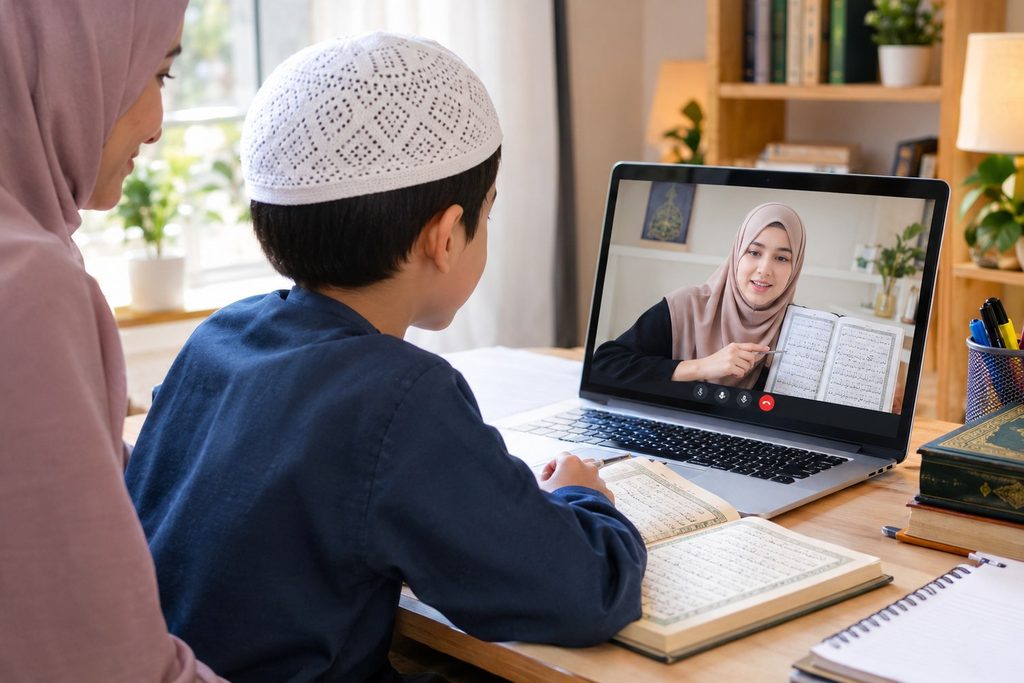
Choose a Patient and Child-Friendly Online Quran Teacher
Children often need repetition, encouragement, and clear instructions. A teacher who is patient and understands children’s learning needs can make lessons more comfortable and productive.
Notice how the teacher reacts when your child makes a mistake or struggles with a new lesson. Does the teacher explain it again? Do they encourage the child to try once more? Does your child feel comfortable asking questions?
A good teacher maintains appropriate classroom discipline without making the child afraid of learning. Lessons should be focused, respectful, and suitable for the child’s age.
Parents should also consider whether the teacher can maintain their child’s attention during an online session. Short activities, clear explanations, and regular opportunities to practise can help younger children remain engaged.
Decide Which Type of Quran Classes Your Child Needs
Different children have different learning goals. Before choosing a course, identify what your child needs to learn.
Basic Quran reading: Suitable for beginners who need to learn Arabic letters, letter sounds, and how to read words.
Nazirah Quran: Suitable for children learning to read the Quran by looking at the text, with attention to fluency and correct recitation.
Tajweed: Focuses on the rules of Quran recitation and improving pronunciation.
Quran memorisation (Hifz): Requires a structured plan, regular revision, and appropriate guidance.
Quran translation and Tafseer: Helps students learn the meanings of Quranic verses and study their explanation at an appropriate level.
Ask the teacher to assess your child’s current level before recommending a course. A clear learning plan makes it easier to understand what the child will study and how progress will be measured.
Evaluate the Trial Class
A trial class can help parents understand the teacher’s approach before making a longer-term commitment. It also gives the child an opportunity to experience the online learning environment.
During the trial, pay attention to the following points:
-
- Teaching style: Does the teacher explain the lesson clearly?
-
- Pronunciation: Are reading mistakes identified and corrected?
-
- Patience: Does the teacher allow enough time for practice?
-
- Communication: Can your child understand the teacher’s instructions?
-
- Technology: Can your child hear the teacher and follow the lesson comfortably?
-
- Learning plan: Does the teacher explain what the child should learn next?
After the session, ask your child how they felt about the lesson. Your child’s comfort matters, although one lesson alone may not show everything about a teacher’s long-term effectiveness.
AlQuranConnect.com offers a two-day free trial, subject to the current terms of the service. Parents can use the trial period to explore the teaching approach and decide whether it suits their child’s needs.
Ask How Your Child’s Progress Will Be Tracked
Regular progress updates help parents understand whether their child is developing the required skills. Before enrolling, ask how the teacher measures progress and how often parents will receive feedback.
Depending on the course, progress may include:
-
- Recognition and pronunciation of Arabic letters.
-
- Reading fluency and accuracy.
-
- Application of Tajweed rules.
-
- Completion of lessons or assigned practice.
-
- Memorisation and revision, where applicable.
-
- Confidence and participation during lessons.
Progress should be assessed according to the child’s starting level and learning goals. Some children improve quickly in one area but need more time in another.
Ask whether the teacher will explain areas that need improvement and suggest simple practice activities. Regular, realistic feedback is more useful than promises of guaranteed results within a fixed number of days.
Check Communication with Parents
Parents should know how their child is progressing and whom to contact if they have a question or concern.
Before enrolling, ask how the teacher or academy communicates with parents. Find out whether progress updates, attendance information, schedule changes, and lesson feedback will be shared regularly.
Clear communication also helps parents support learning at home. For example, a teacher might recommend practising a particular set of Arabic letters or revising a previously learned passage.
It is helpful to agree on communication arrangements before classes begin. This avoids confusion and allows parents to stay involved without interrupting the child’s lessons.
Consider Safety, Schedule, and Reliability
Online Quran classes need a suitable learning environment and clear arrangements between parents, teachers, and students.
Parents should know which platform will be used, how lessons will be scheduled, and how to contact the teacher. For younger children, parents should remain appropriately involved in arranging and supervising online sessions.
Consider these practical points:
-
- Choose a regular time that fits your child’s school and family routine.
-
- Check the internet connection, camera, microphone, and learning device.
-
- Understand the rules for cancellations, missed classes, and rescheduling.
-
- Ask who will teach your child and how any teacher changes are handled.
-
- Keep communication and payment arrangements clear.
-
- Make sure online communication follows appropriate child-safety boundaries.
Parents can also review guidance from the eSafety Commissioner on online safety for parents. Although this resource is not specifically about Quran classes, it offers useful advice for helping children stay safer online.
A reliable teacher or academy should welcome reasonable questions about lesson arrangements, privacy, and supervision.
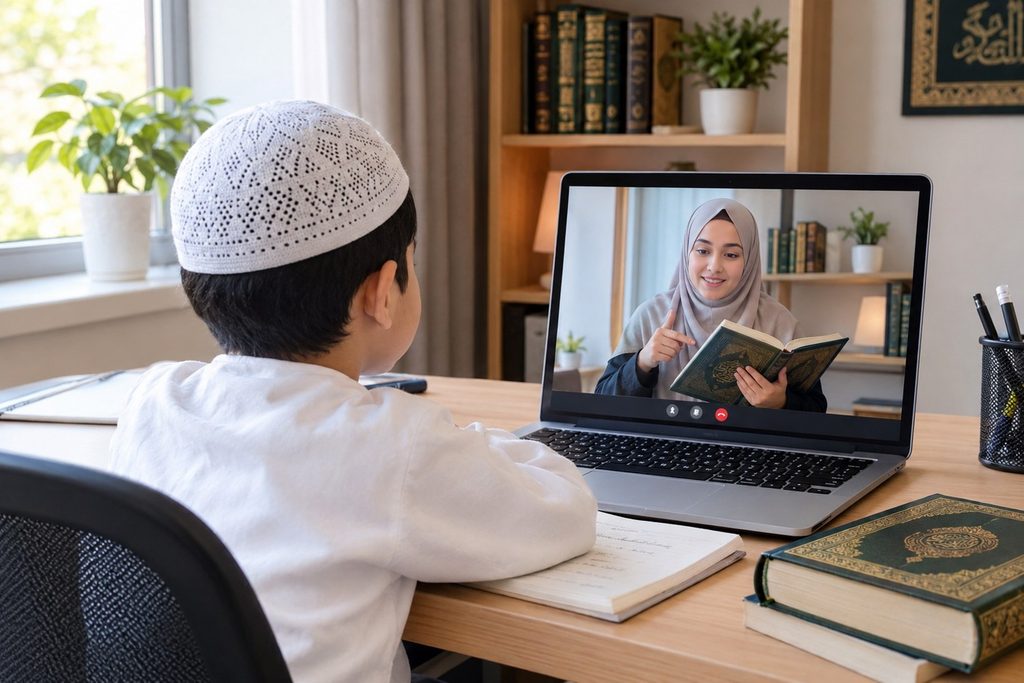
Questions to Ask Before Enrolling
Before making your decision, consider asking the teacher or academy these questions:
What experience do you have teaching children of my child’s age?
How do you assess a new student’s Quran reading level?
How do you teach Tajweed and correct pronunciation mistakes?
What happens if my child finds a lesson difficult?
How will you share progress updates with parents?
Which online platform will be used for classes?
What happens if a lesson is missed or needs to be rescheduled?
Is a trial class available, and what are its terms?
What is included in the course, and what are the fees?
How can parents raise questions or concerns?
The answers should be clear and realistic. Be cautious of guaranteed fluency or memorisation within an unusually short period, especially when the teacher has not yet assessed your child’s level.
Common Mistakes Parents Should Avoid
Choosing an online Quran teacher based only on price can lead to disappointment. Affordable classes may suit some families, but teaching quality, communication, and the child’s needs should also be considered.
Another mistake is assuming that a teacher who is excellent with adults will automatically have the right approach for young children. Teaching children often requires different communication methods, patience, and lesson planning.
Parents should also avoid expecting immediate results. Learning to read the Quran correctly takes practice and consistency. A good teacher can guide the process, but the child’s progress depends on several factors, including starting level, attendance, practice, and individual learning needs.
Finally, do not overlook communication and online safety. A clear learning plan and suitable supervision are important parts of a positive online learning experience.
A Practical Checklist for Parents
Before enrolling your child, use this checklist:
-
- The teacher has suitable Quranic knowledge and relevant teaching experience.
-
- The teacher can explain Tajweed and pronunciation clearly.
-
- The teaching style is patient and appropriate for children.
-
- The course matches your child’s current level and learning goals.
-
- A trial class is available, or you can otherwise assess the teaching approach.
-
- Progress updates and parent communication are clearly explained.
-
- The schedule, platform, fees, and cancellation arrangements are understood.
-
- Appropriate online safety and supervision arrangements are in place.
-
- Your child feels comfortable asking questions and practising.
You do not need to find a teacher who promises everything. Look for someone who communicates honestly, teaches carefully, and provides a suitable learning plan for your child.
Frequently Asked Questions
How do I choose a good online Quran teacher for my child?
Look for sound Quranic knowledge, suitable teaching experience, clear Tajweed instruction, patience, good communication, and a structured learning plan. A trial class can help you evaluate the teacher’s approach.
Is a trial class important?
Yes. A trial class lets you observe how the teacher explains lessons, corrects mistakes, and interacts with your child. It also helps you check whether the online setup works well.
Are one-to-one online Quran classes better for children?
One-to-one classes can provide more individual attention and allow the teacher to adjust the pace to the child’s needs. However, the best format depends on the child’s learning style, goals, and comfort.
How can I track my child’s Quran learning progress?
Ask for regular updates on reading accuracy, fluency, Tajweed, memorisation where relevant, and areas needing more practice. Progress should be measured against the child’s starting level and agreed learning goals.
At what age can a child start online Quran classes?
The suitable age depends on the child’s attention span, readiness, and familiarity with using an online learning device. Ask the teacher how lessons are adapted for younger beginners.
What should I check before paying for online Quran classes?
Confirm the course content, teacher arrangements, schedule, fees, cancellation policy, parent communication, trial terms, and online safety arrangements before making a commitment.
Conclusion
Choosing the right online Quran teacher for your child takes more than comparing prices or class timings. Parents should look for a online quran teacher who has suitable Quranic knowledge, explains lessons clearly, teaches with patience, and communicates regularly about progress.
Take time to identify your child’s learning needs, ask practical questions, and evaluate the teaching approach before enrolling. With consistent practice, suitable guidance, and family support, your child can work towards stronger Quran reading skills and a more confident learning experience.
If you are exploring online Quran learning for your child, you can visit AlQuranConnect.com to learn more about the available services and ask which option may suit your child’s level and goals.